



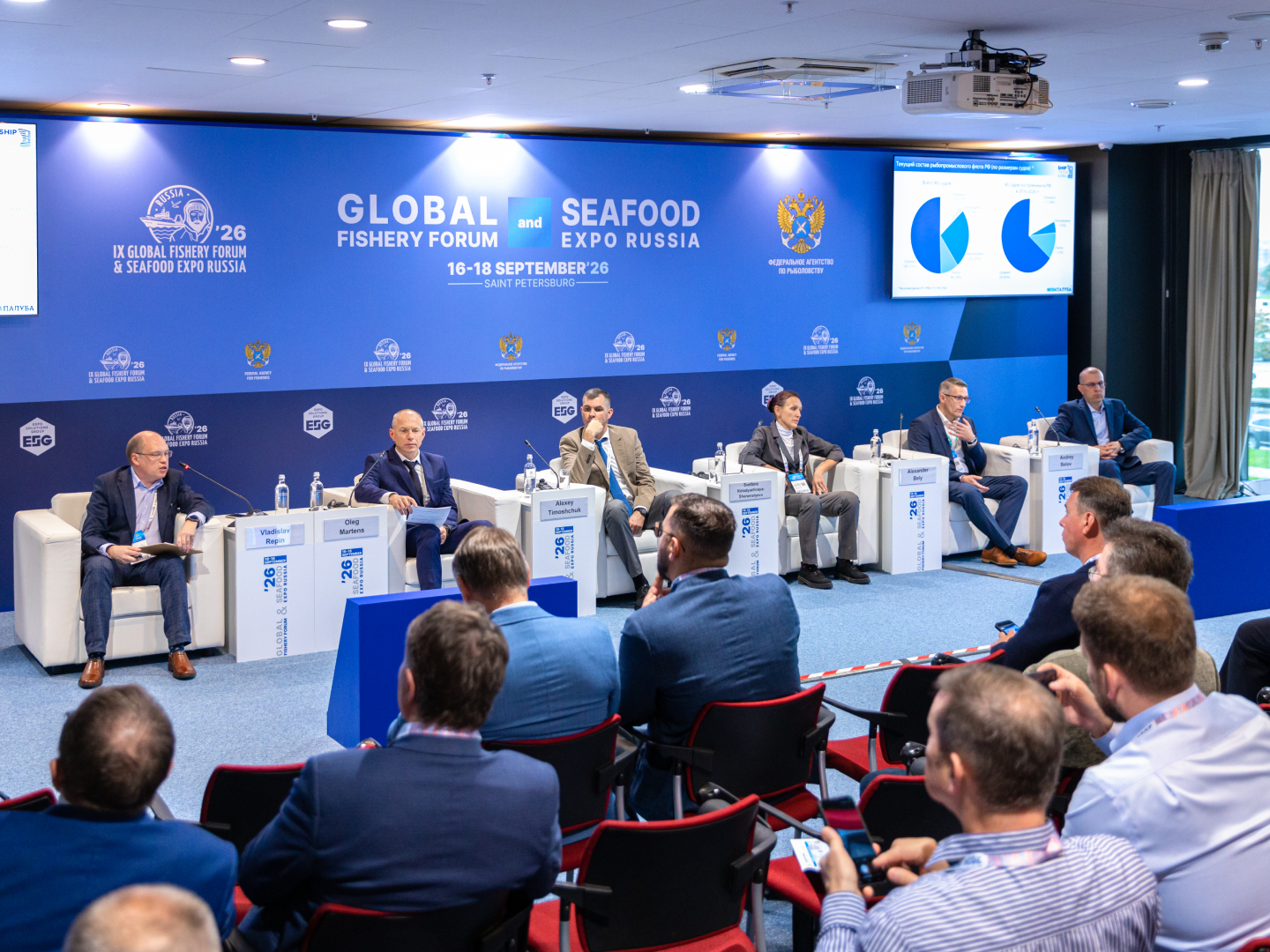
The Ship Tech Global roundtable "Fishing fleet – moving from present to future" was held as part of the business program of the IX Global Fishery Forum & Seafood Expo Russia 2026. The event was organised by the Mediapaluba news agency in partnership with Expo Solutions Group. Discussions focused on the state of Russia's fishing fleet, prospects for its modernisation and opportunities to expand international cooperation in the shipbuilding industry.
The latest data on the fishing fleet was presented by Alexey Timoshchuk, head of the Technical Supervision Department for Industry and Shipbuilding at the Russian Maritime Register of Shipping (RS). He reported that the number of fishing vessels under RS technical supervision had fallen from 990 to 965 over the past year.
The average age of the fishing fleet has reached 32.7 years, while more than 20% of its vessels are over 40 years old. By comparison, the average age of all vessels classed by the Russian Maritime Register of Shipping is around five years lower.
Over the past decade, 85 vessels have joined the fishing fleet, including 60 built in Russia and 25 built abroad. Despite the positive trend of previous years, fleet renewal slowed in 2025. During the first nine months of the year, 27 vessels were delivered, seven of which were fishing vessels. A year earlier, 14 fishing vessels were built.
At the same time, Russian shipbuilding companies continue to implement new projects. According to the data presented, more than 60 high-tech fishing vessels based on 18 designs are currently under construction. Work is taking place at shipyards across the country, from Kaliningrad to the Russian Far East.
Another focus of the discussion was the development of industrial ties between Russian shipbuilders and international partners. Svetlana Kolodyazhnaya-Sheremetyeva, deputy representative of the Republic of Crimea to the President of the Russian Federation, presented the capabilities of Crimean companies to fulfil orders from African countries and the Republic of Belarus.
Cooperation with African countries could be supported by the Crimean-African Business Council, which includes representatives of 13 countries, mainly from West Africa. According to the speaker, Crimea has the necessary foundations to develop this area, including its existing infrastructure and specialists in fish processing. The mechanisms available within the free economic zone provide additional opportunities to modernise production facilities and attract investment.
Opportunities for cooperation are also being considered through engagement with Belarus, which is developing its own shipbuilding sector. Crimean shipyards could potentially supply completed vessels to Belarusian customers, while partners in the republic could support their subsequent sale on the local market.
The roundtable therefore addressed the renewal and technical condition of Russia's fishing fleet alongside prospects for making fuller use of domestic shipbuilding capacity and developing international industrial cooperation.