



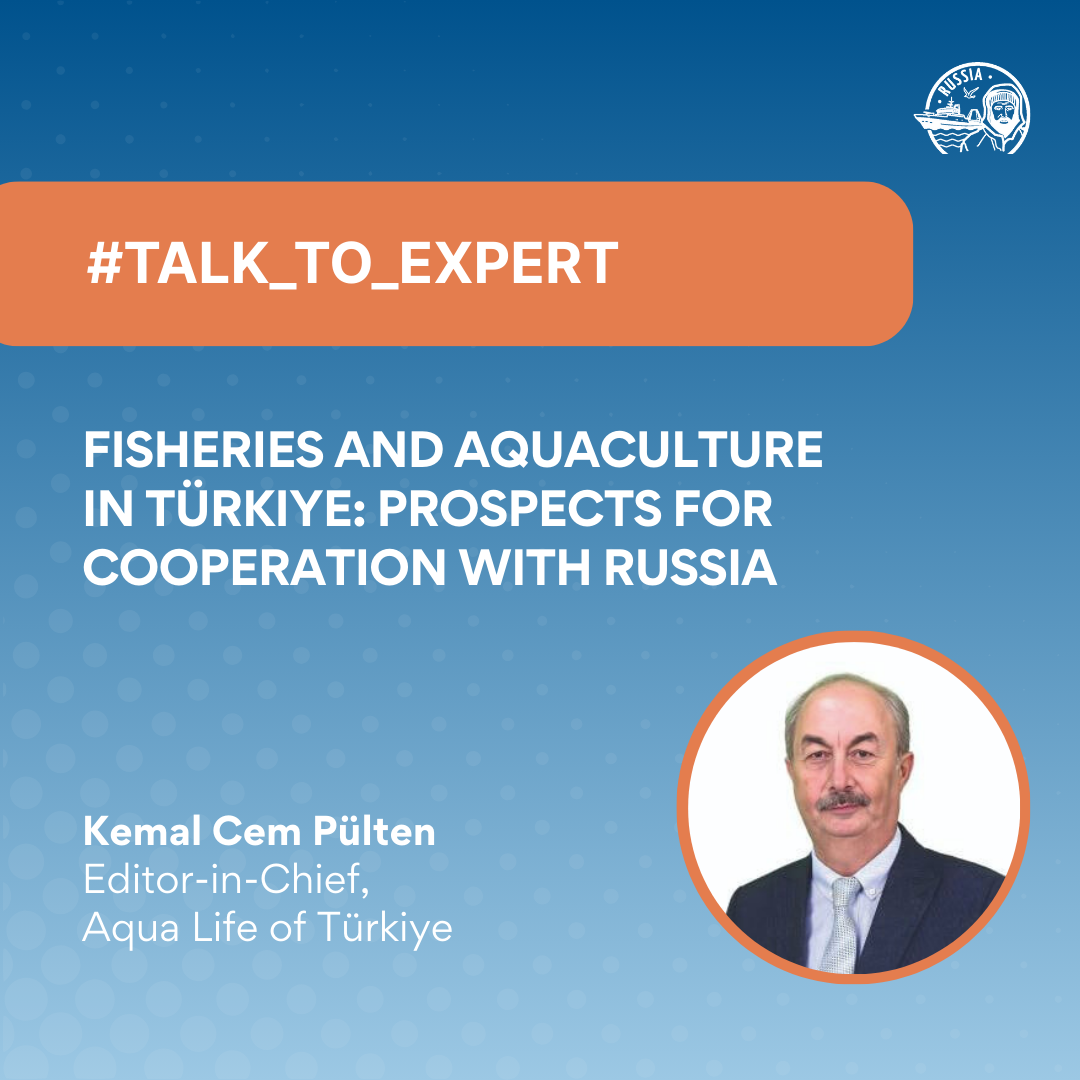
Thanks to its geographical position and production capacity, Türkiye is a strong regional player in fisheries, fishing, and aquaculture. From the Black Sea to the Mediterranean, from our dams and lakes to rivers and production lines stretching to the Aegean Sea, we have the capability to deliver fresh, high-quality products to the market in the shortest possible time.
Through the participation of export associations in trade fairs in nearly 140 countries worldwide—including Russia—and the continued growth in export performance, both countries benefit economically.
Exports of Turkish aquatic products in the first half of 2025 increased by 4%, reaching USD 973.8 million in value. During this period, Russia became the largest buyer.
While exports in the same period of the previous year amounted to USD 934.1 million, the value rose despite a slight decline in volume.
In the first half of 2025, large trout (marketed as Turkish salmon) became the fastest-growing product of the Turkish aquaculture sector. Export revenues rose by 17% compared to the same period of the previous year, reaching USD 217 million.
According to the latest data, Türkiye produced 32,000 tons of trout in the first six months of the year. Long-term forecasts suggest that exports of this species may exceed USD 1 billion by 2032–2035.
Growth Dynamics of Fisheries and Aquaculture in Türkiye
First, let me briefly outline the situation: aquatic production in Türkiye covers both capture fisheries and aquaculture. In 2024, total production amounted to approximately 933,200 tons, of which 577,124 tons came from aquaculture and 356,070 tons from capture fisheries. These figures clearly demonstrate structural changes in the industry and the steady growth of aquaculture.
On the trade side, the picture is also active: in the first half of 2025, Turkish seafood exports to 140 countries totaled around USD 974 million, confirming broad access to international markets.
Main Drivers of Growth
- Impact of international exhibitions – participation of export associations, visits, and industry networking strengthen ties with global markets.
- Domestic and external demand – fish consumption is growing both domestically and abroad, with particularly strong demand for seabass, seabream, and large trout (Turkish salmon).
- Technological advancement and scaling – recirculating aquaculture systems (RAS), improved feed quality, and investments in traceability boost efficiency.
- Government policy and support – subsidies, R&D funding, and infrastructure projects drive growth.
- Market diversification and branding – Türkiye is shifting from raw material exports toward processed, packaged, and branded products, increasing value per unit.
Limiting Factors
- Environmental risks – intensive aquaculture may increase risks of eutrophication and disease; monitoring and environmental assessment are essential.
- Certification and market access – global buyers demand sustainable production certification (ASC, Global G.A.P.) and traceability, which raises costs but ensures long-term stability.
- Climate change – fluctuations in water temperature in rivers and seas may affect stock distribution and feeding efficiency, requiring adaptation strategies.
Three Key Points for Russian Partners
- Türkiye is ready to expand as a reliable producer and supplier with developed infrastructure and export experience.
- We are committed to sustainable development and joint projects: technology transfer, R&D, and certification bring mutual benefits.
- Risks are manageable but require standards and planning. Rapid growth is attractive, but ecological, sanitary, and market criteria cannot be overlooked.
Main Challenges for Turkish Companies in the Russian Market
The Russian market offers great opportunities, yet several challenges remain:
- Logistics and supply chain – an uninterrupted cross-border cold chain is critical for the quality of fresh and frozen products.
- Regulations and certification – Russia’s veterinary and sanitary standards differ from Türkiye’s; documentation and lab analyses must be precise.
- Financial operations – geopolitical conditions and sanctions may slow bank transfers; alternative payment methods are needed.
- Competition and price pressure – support for local producers may make competition tougher for importers.
- Cultural and business differences – trust and long-term partnerships are crucial; joint investments, technology, and local cooperation are key to sustainable market presence.
Promising Directions for Russian Companies in Türkiye
Türkiye is attractive to Russian companies thanks to its strong domestic market and strategic position as a gateway to Europe, the Middle East, and North Africa.
Three particularly promising areas are:
- Feed production – growing aquaculture output increases demand for high-quality feed.
- Recirculating aquaculture systems (RAS) – reduce environmental impact and enable year-round production.
- Processing and logistics – modern infrastructure enhances product value; Russian companies may supply equipment and participate in joint investments.
Additional opportunities include R&D, disease management, genetic improvement, and sustainability consulting, opening space for knowledge and technology exchange.
Most In-Demand Russian Products in Türkiye
According to the official Customs and Trade Authority, in 2024 the main imports from Russia were feed ingredients: fishmeal and fish oil, accounting for about 40–50% of total feed material imports.
Russia is also an important supplier of salmon fry for Turkish aquaculture.
In terms of technology, demand is growing for RAS, water treatment, and cold-chain equipment. Imports of such technologies increased by 15% in 2023–2024.
Direct imports of fresh or processed fish from Russia are limited, since Türkiye largely meets its own needs domestically. Thus, the most in-demand Russian products are feed materials, salmon fry, and aquaculture technologies.
Prospects for Russian–Turkish Cooperation
Geographic proximity and complementary economies create strong potential for cooperation in fisheries and aquaculture.
There are especially many opportunities in technology transfer, joint R&D, and sustainable aquaculture. Combining Russian resources with Turkish export capacity can position both countries as key players in regional supply chains.
For long-term and effective cooperation, trust-based strategic partnerships are essential, along with reducing legal and financial barriers, and harmonizing standards of quality, traceability, and sustainability.
Over the next 5–10 years, such cooperation will strengthen competitiveness in regional and global markets, bringing both economic and technological benefits.
About the Publishing Projects
Aqua Life of Türkiye – a leading media platform covering the richness of Türkiye’s seas and freshwaters, industry news, exports, and sustainable development. More than news, it is a trusted source for professionals, exporters, producers, and scientists.
- Suda Yaşam Dergisi – for 20 years has combined scientific data and industry analysis of marine and freshwater ecosystems.
- Su Ürünleri Avcılığı Dergisi – focuses on fisheries and sustainable fishing.
- Balık Lezzeti – a gastronomic guide to fish and seafood.
- Seafood Expo Magazine – an international industry journal in English, focusing on exports and market trends.
- Seafood Expo B2B – a platform for direct meetings between producers, suppliers, and buyers, fostering sustainable business connections.
- Aquaculture and Fisheries Seminars – held since 2006, bringing together more than 150 speakers, universities, ministries, and research institutes, shaping the roadmap for industry development and supporting dialogue between government, investors, and producers.